7-Eleven Franchise Cost and Profit Sharing in Malaysia
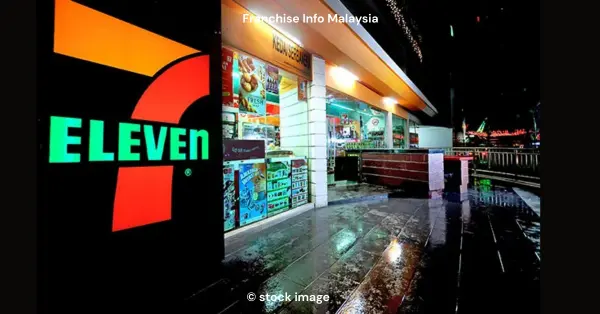
7-Eleven is one of the most recognizable and established franchise brands globally and in Malaysia. Its business model, unlike many traditional franchises, is structured around a profit-sharing agreement, which significantly affects the franchisee’s initial capital outlay and ongoing Return on Investment (ROI).
The investment required for a 7-Eleven franchise in Malaysia is considered mid-range for a retail business of its scale. To learn more about the brand’s history and current offerings, you can visit the official 7-Eleven Malaysia website.
1. Initial Investment and Franchise Fee
The total Initial Investment required to open a 7-Eleven store in Malaysia is approximately RM250,000. This amount covers several key components, including both refundable and non-refundable fees.
| Fee Component | Estimated Cost (MYR) | Status | Financial Function |
| Initial Franchise Fee | RM100,000 | Non-Refundable | Grant of rights to use the brand, system, and training. |
| Stock Purchase | ~RM100,000 | Refundable (Security Deposit) | Initial inventory and operating stock. |
| Security Deposit | RM50,000 | Refundable | Security measure against potential losses or inventory shortages. |
| Total Estimated Initial Capital | RM250,000 | Varies | Total cash outlay to start operations. |
Before proceeding, it is critical to have a clear understanding the difference between Initial Franchise Fee and Total Investment, as the Initial Fee is only one component of the full RM250,000 capital required to launch the business.
Franchise Term: The standard term for a 7-Eleven franchise agreement is 10 years, with an option to renew for an additional 10 years.
2. The Profit Sharing Model (Ongoing Royalties)
7-Eleven’s model is distinct. Instead of paying a fixed percentage Royalty Fee on gross sales like most franchises, 7-Eleven operates on a Gross Profit Split, meaning the franchisor and franchisee divide the store’s gross profit (revenue minus the cost of goods sold).
| Expense Type | Responsibility | Details and Impact on Net Profit Margin |
| Gross Profit Split | Shared | Typically around a 50:50 ratio between 7-Eleven and the Franchisee. |
| Franchisee Incentive | Franchisee Earns | A 2% incentive is often given to the franchisee from the monthly sales turnover, on top of their profit share. |
| Store Rental | 7-Eleven | The franchisor covers major fixed costs like store rent, electricity, depreciation, and insurance. |
| Staff Costs | Franchisee | The franchisee is responsible for staff wages, water & telephone charges, store maintenance, and inventory losses/shortages. |
Export to Sheets
💡 Key Insight: The 7-Eleven model is often viewed as a form of Risk Mitigation for the franchisee, as the company assumes liability for the largest fixed cost: Rent. This significantly lowers the franchise investment risk compared to franchises where the owner must secure and pay the lease independently.
3. Estimated Royalty Fee Structure
While the primary model is profit-sharing, some sources indicate a separate royalty may apply after the initial years.
- Year 1 – Year 5: The RM100,000 Initial Franchise Fee covers the first five years of operation.
- Year 6 – Year 10: A Royalty Fee of RM1,000 per month OR 1% of monthly sales (whichever is applicable) may commence. Always verify the current structure in the latest Franchise Disclosure Document.
4. Requirements for a 7-Eleven Franchisee
Beyond the Capital Investment, the franchisor has stringent requirements to protect the brand’s consistency and quality. As the franchising landscape in Malaysia is strictly governed by the Franchise Act 1998, always ensure you are up to date with the latest regulations from the KPDN (Ministry of Domestic Trade and Consumer Affairs) to fulfill all franchisee registration requirements.
- Age and Citizenship: Must be a Malaysian citizen aged 21 years or older.
- Commitment: Must be willing to operate and manage the store on a full-time basis.
- Training: Completion of the comprehensive training program provided by 7-Eleven is mandatory.
- Financial Standing: Demonstration of financial stability and the ability to cover the initial investment without severe financial strain.
5. Conclusion for Franchise Investment Analysis
Investing in a 7-Eleven franchise provides immediate access to a powerful national brand, robust supply chain logistics, and a business model designed for 24/7 operation. The RM250,000 Initial Investment is attractive given the global scale of the brand, but the prospective franchisee must meticulously review the profit-sharing terms and the working capital calculation to account for the costs they are responsible for (staff, maintenance, inventory losses) to accurately project their net profit margin and return on investment (ROI).
About Franchise-Info
Explore, Compare, & Master Global Franchise Investments. Navigate the world’s most profitable opportunities with data-driven insights.
Subscribe Now: Get Monthly Franchise News and Industry Updates.